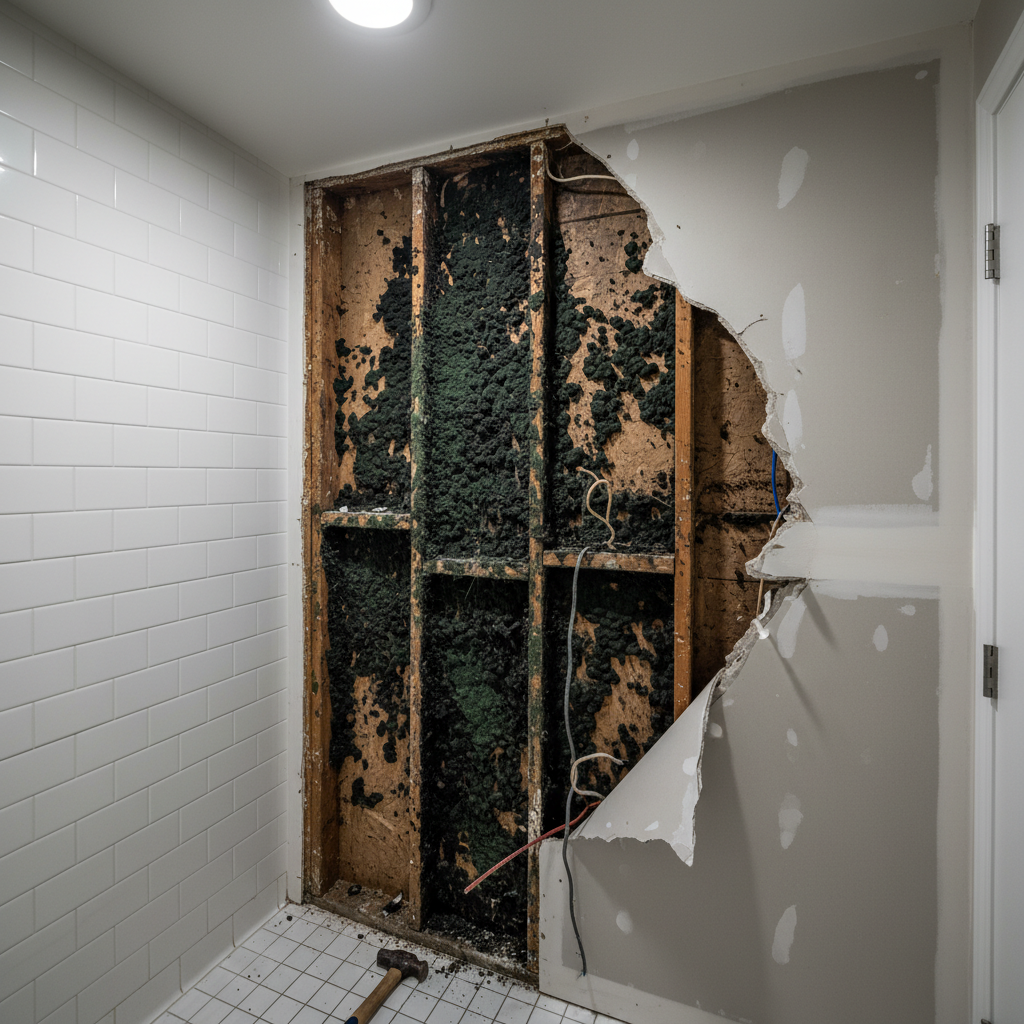
"Black mold" gets blamed for everything from brain fog to cancer. Most of it is overblown — but some of it isn't. Here's how to tell the difference between a mold problem you can clean yourself and one that can genuinely make your family sick.
When people say "black mold," they almost always mean Stachybotrys chartarum — a specific species of greenish-black mold that produces mycotoxins called trichothecenes. It's the one that showed up in major news stories in the 1990s after infants in Cleveland developed pulmonary hemorrhage in homes with heavy mold growth. That case — and the wave of litigation that followed — is how "black mold" became synonymous with health catastrophe in the public mind.
Here's what the news coverage usually leaves out: Stachybotrys is not common. It requires sustained, heavy moisture — think prolonged flooding, chronic roof leaks, or untreated water damage sitting for weeks. It grows slowly, usually on cellulose-rich materials like drywall, ceiling tiles, and cardboard. It doesn't thrive in the same fast, opportunistic way that the molds you're more likely to encounter do.
The more important point: the black or dark appearance of mold is not a reliable indicator of species. Many molds look black or very dark and pose minimal health risk. And some molds that are beige, blue-green, or even white can produce mycotoxins just as concerning as Stachybotrys. Color alone tells you very little. Only testing tells you what you actually have.
Stachybotrys chartarum requires lab confirmation. No home test kit, visual inspection, or smell test can reliably identify it. If you've had significant water intrusion and suspect toxic mold, professional air and surface sampling is the only way to know what you're dealing with.
Most homes contain some level of mold at any given time. Spores are everywhere — in outdoor air, on clothing, tracked in on shoes. The question isn't whether spores exist, it's whether conditions in your home allow them to colonize and grow. Here are the five species that account for the vast majority of household mold problems in the U.S.:
The true "black mold." Slimy, dark greenish-black. Requires sustained moisture (7–12 days minimum). Found on water-damaged drywall, ceiling tiles, wood. Rare, but produces dangerous mycotoxins.
Olive-green to black, powdery texture. The most common indoor mold in the U.S. Found on window sills, damp fabric, HVAC vents. Primary concern is allergic reactions — rarely toxic.
Blue-green, velvety. Fast-growing on water-damaged materials, food, wallpaper. Strong musty odor. Some species produce mycotoxins (ochratoxin A). Can worsen asthma and respiratory symptoms.
Wide range of colors — white, yellow, green, brown. Extremely common in dust and soil. Most species harmless for healthy adults. Some produce aflatoxins. Dangerous for immunocompromised individuals (Aspergillosis).
Dark brown to black, velvety. Frequently found in showers, under sinks, around window frames. A leading trigger for mold-related asthma. Outdoor species that easily moves indoors.
It's worth noting that Penicillium and Aspergillus look nearly identical under casual observation — both are bluish-green and grow on similar surfaces. Telling them apart requires microscopy or culture testing. For remediation purposes, they're treated similarly.
Mold health effects fall into three categories: allergic reactions, irritant responses, and toxin-mediated illness. Most common household molds cause the first two. Only mycotoxin-producing species — Stachybotrys, certain Aspergillus, and some Penicillium — are capable of the third.
The World Health Organization's 2009 guidelines on dampness and mold found that people living in damp, moldy homes have a 30–50% increased risk of respiratory symptoms compared to people in dry, mold-free homes. But that data covers all mold exposure — not specifically Stachybotrys.
| Mold Type | Primary Mechanism | Common Symptoms | High-Risk Groups | Danger Level |
|---|---|---|---|---|
| Stachybotrys chartarum | Mycotoxin (trichothecenes) | Chronic fatigue, headaches, memory issues, nosebleeds, breathing difficulty | Everyone, but especially children, elderly, pregnant women | High |
| Aspergillus (some species) | Infection + mycotoxin (aflatoxin) | Cough, wheezing, lung infection (Aspergillosis) in immunocompromised | Immunocompromised, lung disease patients | Moderate–High |
| Penicillium | Allergen + some mycotoxins | Runny nose, skin rash, asthma flare-ups, sinusitis | Allergy/asthma sufferers | Moderate |
| Cladosporium | Allergen | Sneezing, itchy eyes, nasal congestion, skin irritation | Allergy/asthma sufferers | Low–Moderate |
| Alternaria | Allergen (strong) | Hay fever symptoms, asthma attacks, eczema | Asthma sufferers, children | Moderate |
One thing the mold industry doesn't always say clearly: for healthy adults, brief exposure to even Stachybotrys is unlikely to cause serious illness. The danger comes from chronic, high-level exposure in an enclosed living space — breathing in mycotoxins daily over weeks or months. The dose makes the poison.
Children, infants, and elderly individuals are more vulnerable because their immune systems are either still developing or compromised. People with pre-existing asthma, COPD, or immunodeficiency (HIV, chemotherapy patients, organ transplant recipients) face elevated risk from species that wouldn't cause symptoms in a healthy 35-year-old.
The CDC does not recognize "toxic mold syndrome" or "toxic black mold syndrome" as a clinical diagnosis. While mycotoxin exposure is real and documented, many symptoms attributed to black mold (cognitive problems, extreme fatigue, multiple chemical sensitivities) have not been consistently replicated in controlled studies. That doesn't mean your symptoms aren't real — it means the cause-and-effect link is more complicated than headlines suggest. If you're experiencing persistent health issues and suspect mold, see a physician alongside getting your home tested.
Here's a practical framework for assessing your situation:
Mold requires moisture plus time. The CDC recommends drying water-damaged materials within 24–48 hours to prevent mold colonization. If you respond fast enough after a water event, you can often prevent mold from taking hold entirely — dramatically reducing remediation scope and cost.
This is one of the most important points in this guide: you cannot identify mold species by color. This is not a technicality — it has major practical implications for how you respond to a mold problem.
Consider: the Stachybotrys growing behind your drywall after a basement flood may look almost identical to Cladosporium growing on your window frame. Both are dark. Both have a similar damp, earthy smell. The treatments and urgency levels are completely different.
Conversely, some people see a white or pinkish growth and assume it's harmless. White Aspergillus species can produce aflatoxins — some of the most potent naturally occurring carcinogens known. Color tells you nothing about toxicity.
The appearance factors that do matter:
The only way to confirm species: professional air sampling, bulk/tape surface sampling, or swab sampling sent to an accredited laboratory (AIHA-accredited labs provide the most reliable results). Expect lab results in 3–5 business days.
The honest answer: some mold problems you can handle yourself. Others you absolutely should not. Here's how to draw the line.
For DIY cleanup, the EPA recommends a solution of 1 cup bleach per 1 gallon of water on hard, non-porous surfaces. Never mix bleach with ammonia or other cleaners. Use N-95 respirator, gloves, and eye protection. Seal off the work area with plastic sheeting and ventilate to the outside — not into other rooms. Bag and dispose of any porous materials (sponges, rags) that touched the mold.
Remediation without fixing the cause is temporary. Find the leak, fix the humidity problem, or address the drainage issue before you spend money on cleanup. Mold will return within weeks if moisture remains.
A certified industrial hygienist (CIH) or IICRC-certified mold inspector should assess scope before any remediation begins. This baseline test also protects you — before-and-after testing proves the remediation worked.
Professional mold remediation costs vary widely. A single quote is rarely representative. Scope, containment procedures, and post-remediation verification requirements should be in writing before work starts.
Reputable remediators will support or recommend post-remediation verification (PRV) — a clearance air test confirming spore counts have returned to normal outdoor baseline levels. If a contractor resists this step, find another contractor.
Dehumidifier (target <50% relative humidity), improved ventilation in bathrooms and kitchens, sealed crawl space, proper grading around the foundation. These prevent recurrence.
The EPA's Mold Remediation in Schools and Commercial Buildings guide (EPA 402-K-01-001) established the 10-square-foot threshold as the dividing line between cleanup you can manage yourself and remediation that should involve professionals. This guideline was written for commercial buildings and has been widely adopted as a general framework for residential situations as well.
What the rule actually says:
One important caveat: this 10 sq ft rule applies to visible surface mold. If you have reason to believe there's mold behind walls, under flooring, or in a crawl space, the rule doesn't apply the same way. You can't measure what you can't see — and what you can't see is often significantly larger than what's visible on the surface.
Studies on post-flood mold contamination show that by the time visible growth appears on a wall surface, the mold colony behind the drywall is typically 3–5x larger than what's visible. A small visible patch after a flood is often evidence of a much larger problem beneath the surface.
If you're seeing mold on painted drywall after a flooding or leak event, assume the contamination extends significantly behind the surface. Drywall is porous — it wicks moisture inward and provides the cellulose Stachybotrys needs to grow. Professional inspection with moisture meters and sometimes thermal imaging is the only way to assess the true scope.
Cost varies significantly based on contamination size, mold type, affected materials, and geographic market. Here's a realistic breakdown based on industry data from IICRC-certified contractors:
| Scope / Scenario | Typical Low | Typical High | Key Cost Drivers |
|---|---|---|---|
| Small surface mold (<10 sq ft), non-porous surface | $200 | $600 | Usually DIY-able; pro cost is mostly labor |
| Bathroom mold (10–30 sq ft), tile/grout/caulk | $500 | $1,500 | Containment, surface treatment, caulk replacement |
| Single room, drywall affected (30–100 sq ft) | $1,500 | $5,000 | Drywall removal + replacement adds substantial cost |
| Crawl space remediation | $2,000 | $8,000 | Encapsulation, structural wood treatment, ventilation |
| Basement flood (significant Stachybotrys risk) | $4,000 | $15,000+ | Scope unknown until assessment; can expand significantly |
| HVAC/duct system contamination | $3,000 | $10,000 | Full duct cleaning, coil treatment, possible replacement |
| Whole-house (post-major flood or roof failure) | $10,000 | $30,000+ | Multiple affected systems; often insurance claim territory |
A few things that drive costs up that homeowners don't always anticipate:
Typically: only if the mold results directly from a covered peril (burst pipe, storm damage) and you addressed the water damage promptly. Mold from ongoing moisture issues, deferred maintenance, or flooding (which requires separate flood insurance) is usually excluded. Document everything and file quickly — most policies have time limits on mold-related claims. An independent public adjuster can help maximize your claim if it's large.
Black mold (Stachybotrys chartarum) is real. Its health effects are real. But the vast majority of mold you'll find in your home is not Stachybotrys, and the vast majority of mold problems can be addressed affordably if you catch them early and take the right steps.
The two things that create serious mold problems are: sustained moisture and delayed action. Fix moisture fast, respond to water events within 48 hours, and test before assuming. Those three habits prevent most of what ends up in the $10,000–$30,000 remediation category.
If you have any doubt about what you're looking at — especially if you've had flooding, a major leak, or anyone at home is experiencing symptoms — get a professional assessment. The inspection cost is a fraction of what remediation costs if you let it go.