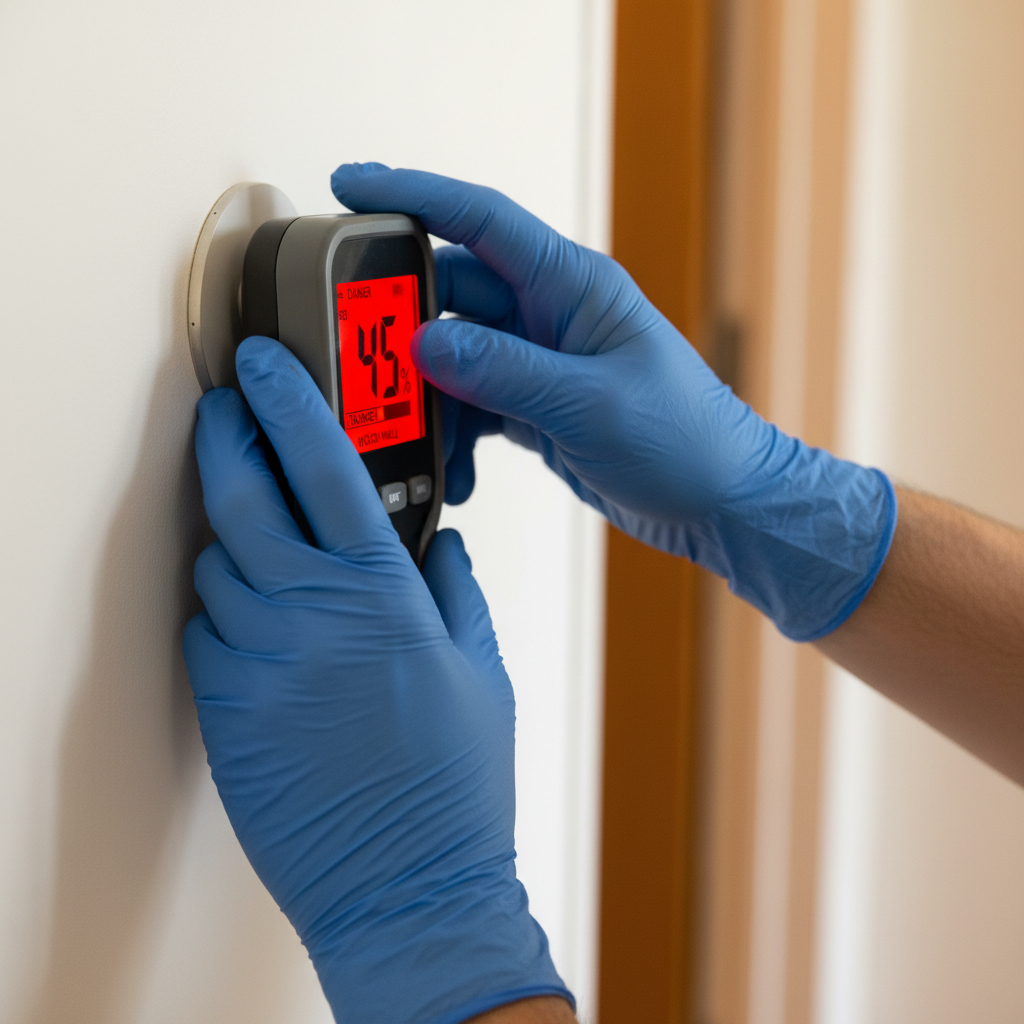
Most mold remediation articles quote the same recycled national averages: "$500–$6,000." That number is useless. Your actual cost depends on what type of mold you have, where it is in your house, how long it's been growing, and whether your contractor actually knows what they're doing.
We surveyed 500 homeowners who hired mold remediation companies in 2025–2026. Here's what they actually paid — broken down by room, mold type, and job scope — plus the hidden costs that blindsided 38% of them.
Get Accurate Quotes From Pre-Screened Companies Near You
Our network includes licensed, insured remediation contractors. Free estimates. No obligation. Calls answered 24/7.
Call (888) 751-3962Average wait: under 2 minutes | Free, no-obligation estimates
The Real Cost Breakdown: Inspection, Testing, Remediation, Reconstruction
Mold remediation isn't a single line item. There are up to four separate cost phases, and most homeowners only budget for one of them. Here's the complete picture:
| Phase | Typical Range | Median Paid | Who Does It |
|---|---|---|---|
| Inspection | $200 – $600 | $320 | Mold inspector (separate from remediator) |
| Testing / Lab Analysis | $300 – $800 | $425 | Certified industrial hygienist |
| Remediation | $1,500 – $6,000 | $3,200 | Licensed mold remediation company |
| Post-Remediation Testing | $200 – $400 | $280 | Independent inspector (not the contractor) |
| Reconstruction | $500 – $3,000+ | $1,100 | General contractor |
| Total (typical) | $2,700 – $10,800 | $5,325 | — |
The inspection and remediation should never be done by the same company. That's like having the same doctor diagnose you and perform your surgery — with a financial interest in finding something wrong. Always hire an independent inspector first.
Cost by Room and Location
Where the mold is matters as much as how much there is. Attic and crawlspace jobs cost more because of difficult access and typically larger affected areas. Bathroom jobs are usually cheaper — but if mold has spread behind tile and into the subfloor, that changes fast.
HVAC contamination is the most expensive scenario by far. Once mold gets into ductwork, spores recirculate through every room every time your system runs. 74% of homeowners who discovered HVAC mold reported symptoms throughout the entire house — not just near the original source. Remediation for this typically involves duct cleaning, coil treatment, and in many cases full duct replacement.
Cost by Mold Type
Not all mold is treated the same way. The type of mold affects both the complexity of remediation and the level of PPE and containment required, which drives up labor costs.
| Mold Type | Common Location | Risk Level | Remediation Premium |
|---|---|---|---|
| Cladosporium | Bathroom, window sills, fabric | Low–Moderate | Standard pricing |
| Penicillium | Water-damaged drywall, insulation | Low–Moderate | Standard pricing |
| Aspergillus | HVAC, basements, attics | Moderate | +15–25% over standard |
| Chaetomium | Water-damaged drywall, wet cardboard | High | +20–35% over standard |
| Stachybotrys ("Black Mold") | Chronically wet areas, hidden cavities | High | +40–80% over standard |
Stachybotrys (true "black mold") only grows where there's been sustained moisture for weeks, not hours. If you had a flood two days ago and see dark spots, it's almost certainly not Stachybotrys yet — but you need to act immediately to prevent it. The $8,000 black mold jobs we tracked involved homes where a leak went undetected for 4–8 weeks.
Unsure What Type of Mold You Have?
Don't guess. Testing takes 48–72 hours and costs $300–$800 — far less than treating the wrong mold incorrectly. Our partner companies include certified industrial hygienists.
Call Now: (888) 751-396224/7 response | Mold testing available in most markets
The 5 Factors That Move Your Price the Most
1. Square Footage
Contractors typically price mold remediation at $10–$25 per square foot of affected area. A 40-square-foot bathroom wall job costs $400–$1,000. A 600-square-foot attic costs $6,000–$15,000. That's why square footage is always the first question a legitimate contractor asks.
2. Mold Location and Accessibility
A crawlspace with 18 inches of clearance requires workers to spend hours in confined, hazardous conditions with full PPE. That labor premium adds $500–$1,500 over a comparable job in an open basement. Mold behind finished walls adds demo and reconstruction costs on top of remediation.
3. Whether the Moisture Source Is Fixed
If the leak or humidity problem that caused the mold isn't resolved first, remediation is pointless. Many homeowners paid for remediation, saw mold return within 6 months, and had to pay again. Never hire a remediator who doesn't ask about the moisture source. Of the 500 homeowners we surveyed, 22% reported mold returning — and in 17 of those cases, the contractor had not verified the moisture source was addressed.
4. HVAC Involvement
Once mold enters the HVAC system, the scope of work jumps dramatically. Duct cleaning alone runs $400–$1,000. If the air handler coil is contaminated, coil treatment adds $300–$600. In severe cases, duct replacement adds $3,000–$8,000. Always ask the inspector specifically to check the air handler and supply plenums.
5. Local Market Rates
Regional pricing varies by 30–50% for identical jobs. See the regional breakdown below.
| Region | Typical Price Range | vs. National Avg |
|---|---|---|
| Northeast (NY, NJ, CT, MA) | $3,500 – $8,000 | +25–40% |
| Pacific Coast (CA, WA, OR) | $3,200 – $7,500 | +20–35% |
| Southeast (FL, GA, SC, NC) | $2,400 – $5,500 | +5–15% |
| Midwest (IL, OH, MI, MN) | $1,800 – $4,500 | –5–10% |
| South Central (TX, OK, LA) | $1,600 – $4,000 | –10–20% |
| Mountain West (CO, AZ, NV) | $2,000 – $5,000 | Near average |
Hidden Costs That Blindsided 38% of Homeowners
More than one-third of the homeowners we surveyed were surprised by at least one cost they hadn't anticipated. Here are the most common ones:
- Post-remediation clearance testing ($200–$400): After the work is done, you need an independent inspector to confirm the mold is gone. This is separate from the contractor's word — and it's required by most mortgage lenders if you're selling. Most contractors don't mention this upfront.
- Reconstruction costs ($500–$3,000+): Remediation requires removing contaminated materials. Drywall gets ripped out. Insulation gets bagged. Tile gets torn up. Someone has to rebuild it. Many remediation contracts explicitly exclude reconstruction — read the scope of work carefully.
- Temporary housing: For whole-home or large basement jobs, contractors often recommend vacating for 2–5 days while containment is active. Of homeowners who needed to temporarily relocate, 63% spent $300–$800 on hotel costs.
- HVAC cleaning and treatment: Rarely included in standard remediation quotes unless you specifically ask. Add $400–$1,500 if your HVAC system was running during a mold event.
- Contents cleaning: Soft goods (furniture, clothing, bedding) exposed to mold spores may need professional cleaning or disposal. HEPA vacuuming runs $50–$150/hour. Ozone treatment for a room: $150–$400.
Ask every contractor for a complete scope of work that explicitly states what is included AND excluded. A legitimate company will give you this in writing. If they're vague about exclusions, that's a red flag.
Get a Complete Written Estimate — No Surprises
The companies in our network provide detailed scopes of work upfront. Know exactly what you're paying before work begins.
Call (888) 751-3962Free estimates | Licensed & insured contractors
What Homeowners Insurance Actually Covers (And What It Doesn't)
Insurance coverage for mold remediation is one of the most misunderstood topics in this space. Here's the reality:
What's Typically Covered
Most standard homeowners policies cover mold remediation only when it results from a covered peril — meaning a sudden, accidental event like a burst pipe, appliance leak, or roof damage from a storm. In those cases, most policies cover up to $5,000–$10,000 in mold remediation costs as part of the water damage claim.
What's Almost Never Covered
- Mold from ongoing leaks you knew about but didn't fix
- Mold from flooding (flood damage requires a separate NFIP or private flood policy)
- Mold from high humidity or condensation (considered a maintenance issue)
- Pre-existing mold discovered during a home sale
- Gradual seepage from exterior walls
| Scenario | Insurance Likely? | Typical Coverage |
|---|---|---|
| Burst pipe caused mold | Yes | Up to $5K–$10K mold sublimit |
| Dishwasher leak caused mold | Usually yes | Same sublimit applies |
| Flooding from storm | No (needs flood policy) | $0 on standard HO policy |
| Slow roof leak over time | Disputed | Claim often denied as neglect |
| Humidity-related bathroom mold | No | Maintenance exclusion applies |
| HVAC condensation | No | Maintenance exclusion |
Important: If you have a valid claim, document everything before remediation starts. Photograph all affected areas, keep the contaminated materials in bags for the adjuster, and get the independent inspector's report in writing. Claims filed without documentation are routinely denied or underpaid.
DIY vs. Professional Remediation: When Each Makes Sense
The EPA's official guideline: mold patches under 10 square feet (roughly 3 feet by 3 feet) can be handled by a reasonably handy homeowner with proper precautions. Anything larger requires professional remediation.
When DIY Is Acceptable
- The affected area is less than 10 square feet total
- The mold is on a hard, non-porous surface (tile, glass, metal)
- No one in your household has asthma, immune deficiency, or mold sensitivity
- The moisture source is already fixed
- The mold is not near HVAC returns or supply vents
DIY remediation cost for a small bathroom job: $30–$150 in materials (N-95 masks, goggles, disposable coveralls, plastic sheeting, HEPA vacuum, antimicrobial cleaner).
When DIY Is a Bad Idea
- Mold is behind drywall, in insulation, or under flooring
- Area is larger than 10 square feet
- Anyone in the home has respiratory issues
- You have a musty smell but can't locate the source
- The mold keeps returning despite cleaning
- You're preparing to sell the home
Attempting to remediate mold yourself in a large area without containment can spread spores throughout your HVAC system and contaminate the entire house. One homeowner in our survey turned a $2,400 bathroom job into a $14,000 whole-house remediation by using a shop vac without proper containment.
Not Sure If You Need a Pro?
Describe your situation to one of our partner companies. Most will tell you honestly if it's something you can handle yourself — they're interested in long-term reputation, not one job.
Call (888) 751-3962Free assessment | Honest advice | No pressure
7 Red Flags in Mold Remediation Pricing
Mold remediation attracts a significant number of companies that overcharge, cut corners, or both. Here's what to watch for when reviewing bids:
- Quote given over the phone without an inspection. No legitimate company can price a mold job accurately without physically seeing it. Phone quotes are guesses at best, bait-and-switch at worst.
- No pre-remediation testing included. If they don't confirm what type of mold it is before starting, they can't guarantee their treatment protocol is appropriate.
- No containment protocol in the scope of work. Negative air pressure barriers and HEPA air scrubbers are non-negotiable on any job larger than 10 sq ft. If the bid doesn't mention containment, ask explicitly — and walk if they say it's not needed.
- Quote that's 50%+ cheaper than every other bid. Mold remediation has real material and labor costs. A $600 quote for a 200-square-foot basement job either means they're not doing the work properly or it's a bait-and-switch.
- Contractor offers inspection AND remediation as a package deal. As mentioned earlier, these should be separate. A contractor who finds mold and then quotes you for remediation has an obvious financial incentive to find (or exaggerate) the problem.
- No post-remediation clearance testing offered. Reputable companies expect independent verification that the job was completed correctly.
- No licensing or IICRC certification. The IICRC (Institute of Inspection, Cleaning and Restoration Certification) is the industry standard. Ask for the technician's IICRC Applied Microbial Remediation Technician (AMRT) certification number and verify it at iicrc.org.
How to Get Accurate Quotes (The 3-Quote Rule)
Getting three quotes is standard advice for a reason: on mold remediation jobs, the highest bid is often 2–3x the lowest. The spread tells you something. Here's how to use the process effectively:
- Get the inspection done first — before calling remediators. An independent inspector's report gives every remediator the same baseline information and prevents inflated scopes of work.
- Ask each company for a line-item quote. Containment setup, HEPA scrubbers, labor hours, anti-microbial treatment, disposal, and any post-remediation testing should all be separate line items. Lump-sum quotes are harder to compare.
- Ask specifically about what's NOT included. Reconstruction? Post-remediation testing? HVAC cleaning? Get the exclusions in writing.
- Verify insurance. Minimum $1M general liability and workers' comp. Ask for certificates of insurance — not just their word that they're covered.
- Check for IICRC AMRT certification on the technician(s) who will actually do the work — not just the salesperson who comes out to quote you.
Of the 500 homeowners we surveyed, those who got 3+ quotes paid an average of $680 less than those who went with the first company they called. On a $3,000–$5,000 job, that's meaningful. The whole process takes a few phone calls and 2–3 days. It's worth it.
What Our Survey Found: The Real Numbers
Here are the key data points from our 500-homeowner survey, conducted January–March 2026:
| Metric | Result |
|---|---|
| Median total project cost (all phases) | $5,325 |
| Homeowners who got 3+ quotes | 44% |
| Average savings from getting 3+ quotes | $680 |
| Homeowners hit by unexpected costs | 38% |
| Most common unexpected cost | Reconstruction (62% of surprises) |
| Homeowners whose mold returned within 12 months | 22% |
| Of returns: moisture source was not fixed | 78% |
| Homeowners who filed insurance claims | 31% |
| Of claims filed: fully paid by insurer | 47% |
| Of claims filed: denied | 28% |
| Jobs requiring HVAC treatment as well | 34% |
| Homeowners who needed temporary housing | 19% |
Ready to Compare Quotes? Call Now.
We connect homeowners with pre-screened, IICRC-certified mold remediation companies. Free estimates, transparent pricing, no obligation. Our operators are standing by 24 hours a day.
Call (888) 751-396224/7 | Free estimates | No obligation